The U.S. added just 29,000 jobs in September. Chris Chmura looks beyond the headline at what’s really driving the labor market slowdown.
Economic Trends
By Chris Chmura
Published Oct 8, 2026
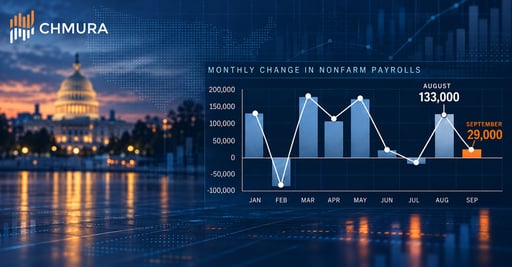
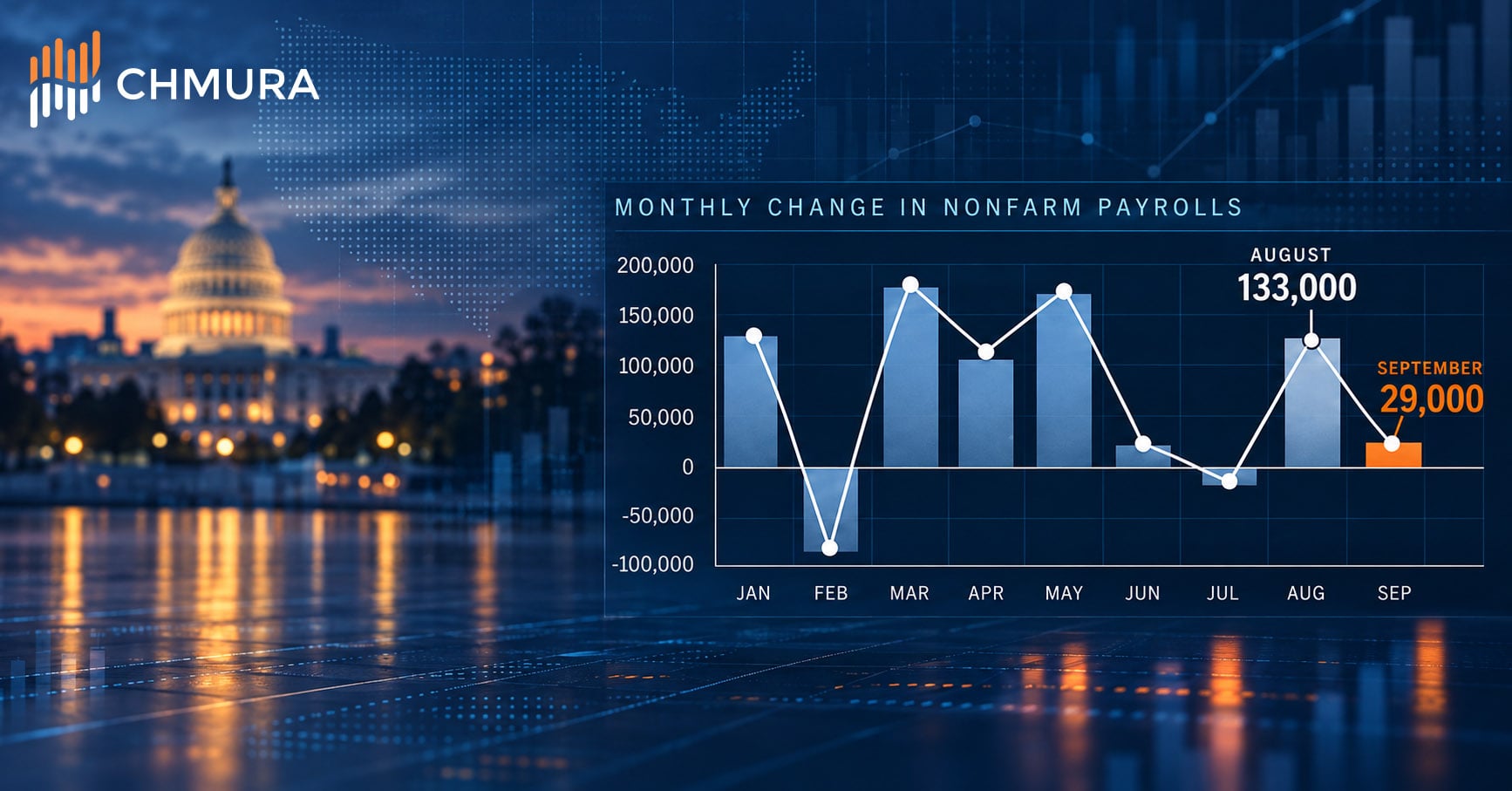
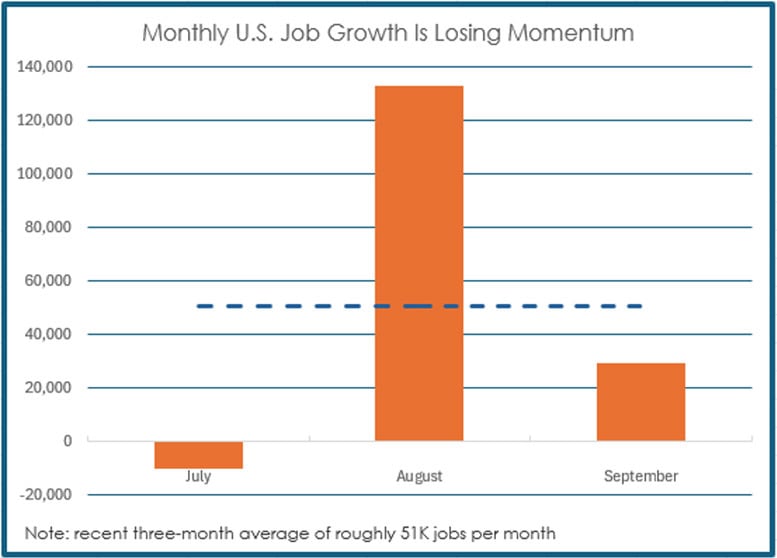
The September jobs report delivered a surprise: U.S. employers added just 29,000 jobs, well below economists’ expectations. That is also a significant step down from August, when revised estimates show the economy added 133,000 jobs. So, what changed in one month?
The answer is more complicated than the headline suggests. September does provide additional evidence that the labor market is cooling. But a closer look at the numbers suggests that August was unusually strong in a few important categories, while September may have been affected by seasonal factors.
In other words, the labor market probably did not deteriorate as dramatically in 30 days as the 133,000-to-29,000 swing might imply.
August Set a High Bar
One of the most important things to understand about September is what happened in August. Two categories—government and leisure & hospitality—accounted for a large portion of August's employment gain. Government employment increased by approximately 44,000 jobs in August, while leisure & hospitality added about 37,000.
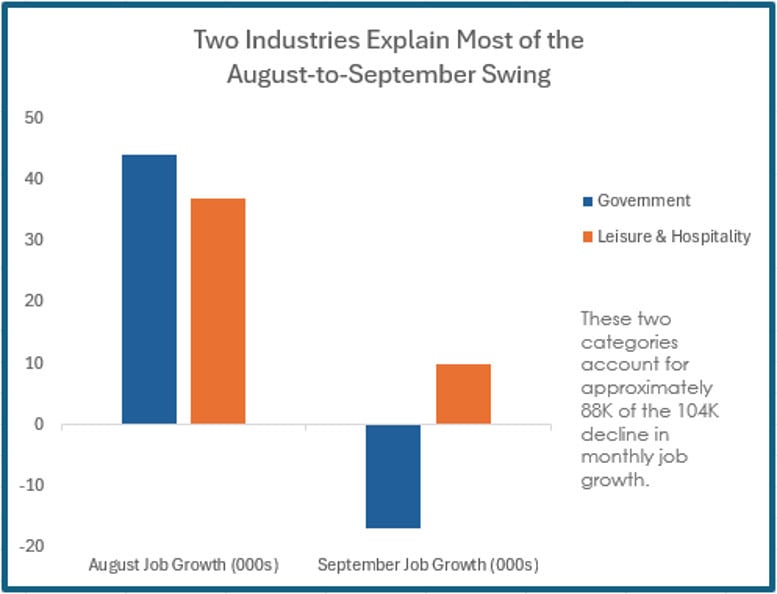
Neither performance carried into September. Government employment declined by approximately 17,000 jobs, while leisure & hospitality added just 10,000. Together, the change in those two categories accounts for roughly 88,000 of the 104,000-job difference between August and September.
That does not make September's report strong. But it does suggest that comparing the two headline numbers alone exaggerates the extent of the slowdown. August was probably somewhat stronger than the underlying trend. September may be somewhat weaker.
Seasonal Factors May Be Part of the Story
September's calendar also deserves attention. Labor Day occurred relatively late this year, which can complicate the seasonal adjustments used in the monthly payroll survey. Seasonal adjustment is necessary because employment predictably changes throughout the year. Schools reopen, summer tourism winds down, retailers prepare for the holidays, and other industries follow recurring hiring patterns. But unusual calendar timing can make those patterns harder to measure.
Some economists have pointed out that September employment reports have historically tended to come in weaker when Labor Day falls later in the calendar. That means the 29,000 figure should be viewed as an estimate—not a precise count of how many jobs the economy actually created. We have already seen how significant revisions can be. August was originally reported at 162,000 jobs before being revised down to 133,000. July was also revised lower. September could change as additional employer responses are received.
Still, Employers Are Becoming More Cautious
Seasonal noise isn't the entire explanation. The broader labor market clearly is slowing. The three-month average for payroll growth has fallen to roughly 51,000 jobs per month, considerably below the pace we experienced earlier in the economic expansion. Job openings have also trended lower, while hiring remains subdued. At the same time, businesses do not appear to be engaging in widespread layoffs.
That combination has created what economists increasingly describe as a low-hire, low-fire labor market. Companies generally want to keep the employees they have. And they are becoming more selective about adding new ones.
Several factors may be contributing to that caution. Businesses continue to face elevated operating expenses, including financing, insurance, transportation, energy, materials, and labor costs. At the same time, customers have become increasingly price sensitive. When businesses are uncertain about future demand or margins, hiring is one of the easiest investments to postpone.
The Slowdown Isn't Happening Everywhere
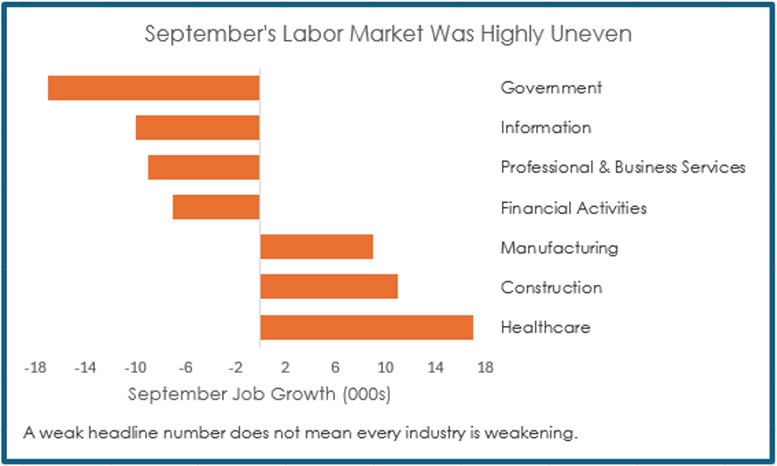
Another reason to look beyond the headline is that labor-market conditions vary considerably by industry. Healthcare still added approximately 17,000 jobs in September. Construction added about 11,000, while manufacturing added approximately 9,000. By contrast, several white-collar sectors weakened. Professional and business services lost jobs, as did information and financial activities. Temporary help employment also declined.
Temporary staffing can be especially useful to watch because companies frequently adjust contingent workers before changing their permanent workforce. There may also be a longer-term shift taking place within certain white-collar occupations.
Businesses are increasingly evaluating how automation and artificial intelligence can perform administrative, analytical, and entry-level tasks. That does not mean AI caused September's weak employment number, but it may gradually change where companies choose to add employees. At the same time, AI investment is creating new demand for highly specialized technical skills. The result is not simply fewer jobs. It is a changing mix of jobs and skills.
Other Indicators Suggest Caution, Not Collapse
The September payroll report also needs to be considered alongside other employment data. ADP estimated that private employers added approximately 90,000 jobs in September, substantially more than the private-sector increase reported by the Bureau of Labor Statistics.
The two reports use different methodologies and often diverge from month to month. Still, that gap provides another reason to avoid putting too much emphasis on a single payroll estimate. Measures from the Institute for Supply Management have also shown employment conditions stabilizing in parts of manufacturing and services.
None of these indicators point to a booming labor market. But neither do they suggest that employment demand suddenly collapsed in September.
What September Is Really Telling Us
My interpretation is that three things happened at once.
- August was unusually strong in several categories that weren't likely to repeat.
- September may contain some seasonal and calendar-related distortion.
- Most importantly, employers really are becoming more cautious about hiring.
That third trend matters much more than whether September ultimately gets revised from 29,000 to 40,000 or 60,000 jobs.
The labor market is transitioning. Companies still need workers, particularly in healthcare, construction, manufacturing, and occupations requiring specialized skills. But employers have less urgency to hire broadly, and they are taking more time to determine whether each additional employee is necessary.
What We Should Watch Next
One weak employment report does not establish a trend. Over the next several months, I will be paying particular attention to:
- Revisions to September payroll employment
- Real-time job posting activity
- Temporary-help employment
- Job openings and hiring rates
- Small-business hiring plans
- Industry-specific demand for workers and skills
Real-time job postings can be especially valuable because they reveal employers' hiring intentions well before many traditional government statistics are released. If postings, openings, hiring, and payroll employment all weaken together, the case for a more significant labor-market slowdown becomes much stronger.
For now, September's report sends a more nuanced message. The labor market hasn't stopped growing. But employers are becoming much more deliberate about when, where, and whom they hire. And that may be the most important employment trend to watch as we head into the final months of 2026.