Get practical guidance on what local workforce development boards do, who serves, how funding is set, and how American Job Centers deliver services.
Workforce

By Chmura Economics & Analytics
Published Jul 15, 2026
Key Takeaways
- Local workforce development boards set policy, guide investment, coordinate partners, and oversee the public workforce system within their service areas.
- Regional evidence gives boards a defensible basis for setting training priorities, directing funds, and responding to employer hiring needs.
- Clear reporting connects a local need with the funded response, services delivered, and measurable results.
A local workforce development board turns regional hiring evidence into policy and investment choices. Those choices connect residents with work and employers with skilled people. It sets system priorities and checks that funded programs produce useful results. Clear reporting makes that work visible.
Residents often meet the system through an American Job Center, training provider, college, or community partner. The board shapes priorities and coordinates partners. It directs public funds toward regional goals. Its choices affect workers, employers, educators, and elected officials.
What a local workforce development board is responsible for
A local workforce development board sets policy for the public workforce system in its service area. It develops the local plan with elected officials and studies regional labor conditions. It oversees programs and monitors service operators. Federal rules describe the board as a strategic leader and convener.
|
Board responsibility |
What it means for the region |
|
Set local workforce policy |
The board establishes priorities that guide services for workers and employers. |
|
Study regional labor conditions |
The board uses current evidence to identify hiring needs and skill gaps. |
|
Oversee service providers |
The board checks that contracted partners meet program and fiscal expectations. |
|
Coordinate system partners |
The board connects employers, educators, agencies, and community groups around shared goals. |
|
Report results publicly |
The board explains how funding, services, and outcomes support the region. |
The board’s role extends beyond approving contracts or reviewing reports. A strong board connects each major choice to a problem, such as too few nursing graduates or weak employment outcomes for young adults. That focus keeps funding tied to practical needs. It also gives partners a common basis for action.
Who serves on a local workforce development board
Local workforce development boards bring hiring authority, workforce experience, education knowledge, and public responsibilities into one governing body. Business representatives must hold a majority of seats. At least 20% of members must represent the workforce. Local elected officials appoint members under state criteria, and the governor certifies the board every two years.
Required and common membership includes:
- Business leaders represent local employers and must include small-business voices.
- Workforce representatives include labor organizations and registered apprenticeship programs.
- Education members include adult education providers and higher education institutions.
- Public members represent employment services, vocational rehabilitation, and economic development.
- Community representatives can add expertise in housing, transportation, youth services, or barriers to work.
Board choices require more than technical knowledge. An employer can explain why a credential fails to match a job. A college leader can explain the time and cost required to revise a program. A labor representative can identify conditions that affect retention. Strong boards use those perspectives to reach practical choices.
Local hiring trends guide workforce investment choices
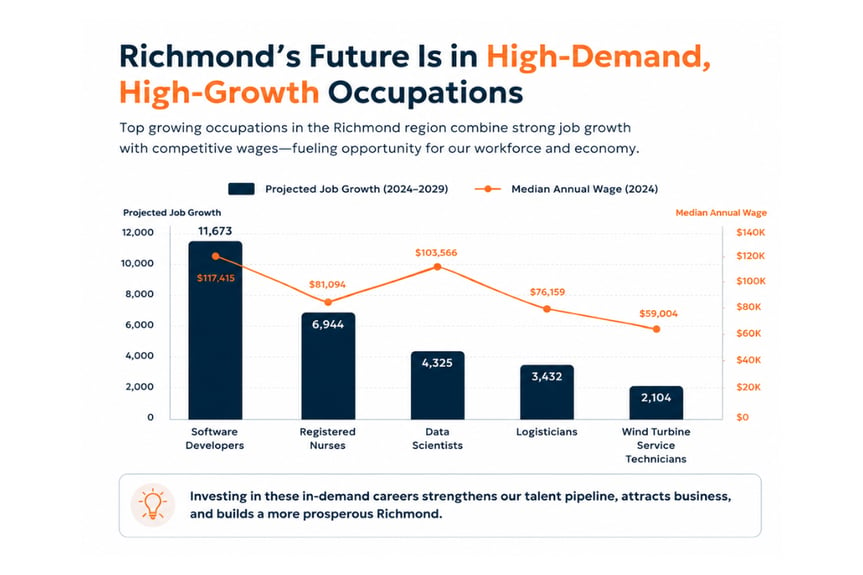
“Local hiring evidence helps the board decide which occupations, skills, and groups need attention first.”
National figures provide context but cannot explain a region’s hiring pace or employer mix. Boards need current regional measures that can be compared across time. Each measure should lead to a clear funding or program question.
Chmura’s analysis found that Richmond-area job postings rose 6.9% from the prior year. Postings across the United States rose 11.3%. Richmond still added advertised opportunities, yet its slower pace suggested cautious local hiring. A board could use that gap to review which occupations account for the growth, which employers are posting, and which programs still match active needs.
Regional workforce analysis can support this work through occupation, posting, wage, skill, and geographic comparisons. The useful output is a defensible choice. That choice could expand a health care pathway, adjust outreach toward overlooked workers, or hold funding steady until stronger hiring evidence appears. Local data gives the board a reason it can explain.
Workforce plans turn regional needs into funded programs
A local workforce plan turns regional evidence into priorities, operating choices, and measurable commitments. The Workforce Innovation and Opportunity Act requires local boards to develop a four-year plan with chief elected officials. The plan should connect labor conditions with services, training, accessibility, and partner roles. It becomes the board’s governing case for investment.
A useful plan starts with a defined problem. A region facing persistent openings for respiratory therapists could compare wages, completions, commuting patterns, and employer hiring activity before funding a training response. The plan would identify the workers to serve, the partners responsible, the expected result, and the measures used to track progress. Each element should trace to the original need.
Plans lose value when they rely on broad statements that could apply anywhere. Local specificity helps funders, elected officials, and service providers understand why one priority comes before another. It gives the board a stable reference when new requests arise. Funding choices are easier to defend when the plan explains the evidence, intended result, and limits.
Program oversight ties public funds to measurable outcomes
Program oversight protects public funds and keeps services focused on useful outcomes. Boards select or monitor operators and providers, negotiate local performance levels, review spending, and assess service quality. Oversight should connect contracts with results. It should also identify weak performance early enough for corrective action.
Federal performance measures include employment after program exit, earnings, credential attainment, measurable skill gains, and service to employers. Those measures create a common accountability base across local areas. A board still needs local context. Participant barriers and economic conditions affect results.
Consider a training provider with high completion rates but weak employment results. The board should examine occupational fit, employer participation, job placement practices, and the timing of the program before renewing funding. A second provider might post modest completion results while serving people with greater barriers to work. Careful oversight avoids judging programs from one number and keeps attention on quality, access, cost, and lasting employment.
American Job Centers carry out board-approved services locally
The main difference between a local workforce development board and an American Job Center is the role each plays. The board sets policy and oversees the system. It decides priorities, approves plans, and monitors performance. The center is where job seekers and employers access services shaped by those choices.
A resident could visit a center for career counseling, job-search support, training referrals, or help after a layoff. An employer could receive recruiting support, applicant screening, or information about training resources. Staff carries out these activities through partner programs with separate rules and responsibilities. The board helps align those services around the local plan.
Confusing the two roles can weaken public understanding. A board should explain that it governs and coordinates the local system rather than serving every participant directly. Centers should be able to show how daily services connect to board priorities. Clear roles reduce duplicated work, clarify accountability, and help residents know where to seek assistance.
Boards coordinate employers with education providers across the region
Boards coordinate employers and education providers so training reflects current occupational needs and leads to attainable work. Their role is to set shared priorities and check progress. They do not control college curricula. They can still provide evidence that helps institutions assess program size, content, and employer relevance.
A manufacturing group might report repeated difficulty hiring industrial maintenance technicians. The board can test that report against job postings, wages, completions, and worker supply. A community college can then assess course capacity, equipment needs, faculty availability, and completion time. Employers can support work-based learning, interviews, or curriculum review within appropriate limits.
Good coordination also serves residents who face barriers to work. Training alone will not solve problems tied to transportation, child care, disability access, or limited work history. Boards can bring service agencies into planning and clarify each partner’s contribution. The result should be a pathway that a participant can enter, complete, and use to secure work with sufficient support.
Clear reporting makes the board’s regional value visible
“A board earns public trust when residents can see the link between regional needs, funded services, and measurable results.”
Clear reporting should explain what problem the board addressed, what it funded, who received support, and what happened afterward. It should also state where results fell short. That honesty gives officials and partners a basis for judgment.
A board presentation should connect a local hiring measure to an approved action and its outcome. That structure is more useful than pages of disconnected totals. It shows why the board acted and gives stakeholders a way to assess the choice. Consistent reporting helps the board adjust programs without losing sight of its goal.
Chmura helps workforce boards prepare regional evidence and impact materials that make this chain easier to explain. The board still owns the judgment, public responsibility, and final choice. Disciplined execution matters most when each investment can be traced from local need to service delivery to outcome. That is how a workforce board becomes visible as a responsible regional institution rather than an administrative layer.